
Daylight Saving Time Sleep Apnea Adjustment A Clinical Guide for 2026
Understanding the Impact of Daylight Saving Time on Sleep Apnea Patients
When that first Sunday in March rolls around each year, most people think about losing an hour of sleep. For sleep apnea patients, though, daylight saving time represents something far more clinically significant: a sudden disruption to the precise circadian rhythms that directly influence airway stability throughout the night. This isn’t just about feeling groggy on Monday morning. The physiological cascade triggered by shifting sleep schedules can measurably worsen apnea events, complicate treatment effectiveness, and expose underlying weaknesses in your current therapy approach.
The challenge becomes especially pronounced for patients in Southern California and the surrounding San Diego region, where consistent weather patterns mean fewer seasonal sleep adjustments throughout the year. When DST arrives, the disruption feels more pronounced because your body hasn’t been gradually adapting to earlier sunsets or later dawns. Your internal clock operates on much stricter schedules than someone experiencing gradual seasonal transitions, which means the sudden one-hour shift creates a more aggressive shock to your system.
Understanding how daylight saving time specifically impacts sleep apnea physiology helps you recognize warning signs early and work with your treatment provider to make necessary adjustments. This matters whether you’re using CPAP therapy, oral appliances, or exploring alternative treatment options. The mechanisms are consistent across all modalities, and the clinical monitoring approach remains similar regardless of your specific device type.
How circadian rhythm disruption affects airway collapse during sleep
Your circadian rhythm serves as the master control system for countless physiological processes, including the muscle tone that keeps your airway open throughout sleep. When you shift your sleep schedule by one hour, you’re essentially creating a mild form of jet lag that your nervous system must recalibrate. The pharyngeal dilator muscles that resist airway collapse operate more effectively during certain circadian phases, and disrupting that rhythm temporarily reduces their protective function.
In the week immediately following a time change, your body’s internal clock hasn’t yet synchronized with the new external time. This desynchronization means the timing of your sleep cycles no longer aligns properly with your circadian peak in airway muscle activity. Patients often report that their snoring becomes noticeably louder during this transition period. Family members frequently comment on increased snoring reports in the days following DST, which reflects the real physiological strain on your upper airway stability.
The pressure settings on your CPAP device remain unchanged during this period, but the airway itself becomes more vulnerable to collapse. Your machine continues delivering the same therapeutic pressure, yet the underlying anatomical challenge has temporarily intensified. This is why recognizing signs your becomes crucial during DST transitions. The difference isn’t mechanical. It’s neurological and physiological.
Sleep fragmentation patterns in the week following time changes
You might expect that losing an hour of sleep would simply mean shorter sleep duration, but the actual pattern is far more disruptive. During the week after DST takes effect, your sleep architecture becomes fragmented in ways that traditional sleep metrics don’t always capture. You’re not just sleeping one hour less; you’re experiencing repeated micro-awakenings as your circadian system struggles to find its new rhythm.
Sleep fragmentation creates a vicious cycle for apnea patients. Each micro-arousal slightly elevates your muscle tone, then subsequent sleep depth variations leave you vulnerable again. This repetitive pattern of arousal and vulnerability intensifies the frequency of actual apnea events. Your AHI (apnea-hypopnea index) score typically climbs during this period, sometimes dramatically. Patients using sleep apnea treatment consistently report elevated event counts in the five to seven days immediately following time changes.
The fragmentation tends to persist for approximately one week, though individual recovery timelines vary. Patients who maintain rigid sleep schedules year-round experience longer adaptation periods than those with more flexible routines. This somewhat counterintuitive pattern reflects how sensitive the circadian system is to consistency; ironically, strict scheduling means greater disruption when that schedule suddenly shifts.
Increased apnea-hypopnea index (AHI) scores during DST transitions
When you review your device data cards or cloud-based tracking in the week following DST, expect to see elevated AHI numbers. This isn’t treatment failure. It’s a predictable physiological response to circadian disruption. Knowing this distinction matters tremendously for your peace of mind and for making sound clinical decisions about whether your therapy actually needs adjusting.
Clinical data consistently shows AHI elevations of 15 to 40 percent during the week immediately after time changes, depending on individual factors like underlying apnea severity and baseline circadian sensitivity. Someone with mild apnea might see their average AHI climb from 8 to 11 events per hour. A patient with moderate apnea might jump from 25 to 35 events per hour. These increases typically resolve within seven to ten days as your circadian rhythm re-synchronizes. Patients sometimes panic at these temporary spikes, wondering if their sleep study results or if their device settings require permanent adjustment.
The key clinical principle is patience with data interpretation. Before making pressure adjustments or equipment changes, allow your body the full adaptation window. Work with your treatment professional to distinguish between temporary DST-related elevations and genuine treatment effectiveness problems that require intervention.
Clinical Assessment and Monitoring Strategies During DST Periods
Pre-transition baseline testing and documentation protocols
Before clocks shift in March or November, establishing a solid baseline is non-negotiable. Your clinical team should complete comprehensive pre-transition documentation at least two weeks before the actual time change. This means pulling full device data reports, reviewing the patient’s current apnea-hypopnea index (AHI), pressure settings, and mask fit status.
Think of this baseline as your control point. Without it, you’re flying blind when trying to determine whether changes in therapy effectiveness are due to DST adjustment or something else entirely. Document specific metrics: average nightly usage hours, leak rates, residual AHI events, and patient-reported symptom severity. For oral appliance users, note the current jaw advancement position and any recent adjustments to treatment effectiveness.
Create a standardized pre-transition checklist. Include device firmware versions (they matter), mask type and size, pressure settings, and ramp time configurations. If a patient reports using humidity settings, document those precisely. Schedule a pre-transition appointment specifically for this documentation rather than trying to squeeze it into a routine visit. This signals to patients that time changes require clinical attention, not casual oversight.
Real-time CPAP device data tracking during the adjustment window
The adjustment window spans roughly seven to fourteen days after DST shifts. During this period, device data becomes your most valuable asset. Modern CPAP machines and oral appliances generate granular nightly data that reveals exactly how patients are responding to the time change.
Remote monitoring platforms should be active and reviewed daily during this window. Look for specific patterns: does AHI spike on the first night after the change? Does it gradually normalize?
Does it remain elevated? A patient who suddenly shows increased AHI events in the first few nights after DST might simply need a few days to adapt, but if elevation persists beyond day seven, that’s clinically significant and requires intervention.
Track mask fit data too. Patients often experience increased leak rates when their sleep routine changes abruptly, and leaks directly compromise therapy effectiveness. If data shows compliance metrics dropping (fewer hours of use) during the adjustment window, that’s expected behavior and shouldn’t trigger alarm, but continued decline beyond day ten warrants a patient conversation about barriers to use.
For patients across San Diego, California, and neighboring regions managing snoring treatment alongside apnea, this tracking proves especially valuable. Changes in position-related events or pressure requirements often appear in the data before patients consciously notice symptoms.
Identifying patients at higher risk for DST-related deterioration
Not all patients struggle equally with DST. Risk stratification helps you focus clinical resources where they’re most needed. Higher-risk patients typically include those with moderate to severe sleep apnea (AHI greater than 30), patients on lower pressure settings who have marginal therapy response, and those with inconsistent baseline compliance.
Patients with comorbid conditions like hypertension, atrial fibrillation, or recent cardiac events face greater cardiovascular stress from disrupted sleep patterns. Age matters too. Older adults generally show slower adaptation to circadian rhythm shifts. Also consider patients whose occupations demand immediate alertness after DST changes, like commercial drivers or shift workers, because their schedules compound the adjustment stress.
Those with irregular baseline sleep schedules (think patients whose weekday and weekend patterns diverge significantly) tend to struggle more with DST than individuals with consistent schedules. This mirrors what clinicians see with graduation season sleep, where schedule disruption amplifies existing apnea symptoms.
Flag these higher-risk patients for proactive outreach before DST hits. Consider scheduling them for early follow-up appointments and ensure they understand what data changes warrant an urgent call to your office.
Timing of follow-up sleep studies relative to time changes
The question of when to conduct repeat sleep studies around DST requires strategic timing. If a patient’s routine study is due during the month of March or November, consider shifting the study date to occur at least two weeks after the time change. This allows the circadian rhythm adjustment to stabilize, producing study results that reflect the patient’s true adapted baseline rather than a transitional state.
However, if clinical deterioration appears significant during the adjustment window (sustained AHI elevation, treatment emergent events, or compliance collapse), don’t delay formal restudying. A sleep study conducted five to seven days post-DST might capture the actual severity of adjustment difficulty and justify treatment modifications that wouldn’t be obvious from baseline data alone.
For patients considering device changes or therapy upgrades during springtime or fall months, align new studies with the post-transition window when possible. This ensures your device selection reflects their stabilized sleep architecture, not their DST chaos period. Understanding why sleep study becomes especially relevant when interpreting studies conducted around time changes.
Device Management and Therapy Optimization Around Time Changes
Adjusting CPAP settings and pressure thresholds during DST transitions
When the clock springs forward, your sleep schedule doesn’t gradually adjust—it shifts abruptly. For CPAP therapy patients, this sudden one-hour change can throw off the carefully calibrated pressure settings that took weeks or months to dial in properly. The airway responds differently when you’re sleeping at what feels like an “wrong” time, and pressure thresholds that worked perfectly last week might feel inadequate or overly aggressive now.
Many patients notice that their initial pressure settings become uncomfortable during the first week after DST. This isn’t necessarily a sign that your equipment is failing. Instead, your body’s sleep architecture is in transition.
When sleep pressure becomes insufficient (typically 2-3 days post-transition), you might experience more apnea events than your baseline, which means temporary pressure adjustments might become necessary. A modest increase of 1-2 cm H2O often addresses this spike, though resist the urge to make major changes right away.
Document your first week of post-DST data carefully. Most modern CPAP devices track pressure events, leak rates, and AHI (apnea-hypopnea index) data that reveals patterns. If your AHI remains elevated beyond day five, contact your sleep medicine professional rather than self-adjusting. Sometimes the adjustment period extends to 10-14 days, especially for patients with moderate to severe sleep apnea. You might also explore whether your current sleep beyond just DST-related factors.
Data integration from home sleep apnea testing devices
Home sleep apnea testing equipment now generates continuous feedback that becomes invaluable during DST transitions. If you’re using a CPAP device with cloud connectivity, your data uploads automatically and creates a visual timeline of how your therapy is responding to the schedule shift. This isn’t just nice-to-have information—it’s clinical gold that helps distinguish between normal transition noise and genuine therapy failure.
The week before DST, establish a baseline by reviewing your device data from the previous 7-10 days. Note your average AHI, pressure usage patterns, and mask seal quality. Once the transition happens, compare the same metrics daily for the first two weeks.
Most patients see a temporary spike in events within 24-48 hours post-change, followed by gradual normalization. If your numbers haven’t returned to baseline by day 10-12, that’s when adjustments become clinically justified rather than reactive.
Patients in San Diego and surrounding communities working with sleep apnea professionals should ensure their devices sync with their provider’s patient portal. Understanding sleep apnea treatment means you’re not flying blind during these disruptive periods. Insurance requirements also shift, so reviewing may 2026 updates ensures your equipment stays covered during any necessary adjustments.
Managing compliance and therapy adherence during sleep schedule disruptions
DST creates a specific compliance challenge: patients already struggling with consistency become even less consistent when their entire sleep window shifts. You’re tired from the time change itself, your bedroom feels “off,” and suddenly it’s harder to fall asleep at what your brain still thinks is the old bedtime. This stress makes skipping therapy nights feel justified, even though consistency during transitions is exactly when you need therapy most.
Set a specific intention before DST arrives. Rather than “I’ll wear my device,” try “I’ll wear my device for at least five nights during the first week after DST, even if I’m traveling or feeling off.” Frame it as short-term commitment rather than your usual permanent routine. Five solid nights gives your body time to re-establish the rhythm your therapy depends on.
Travel during DST transitions significantly impacts compliance. If you’re managing sleep apnea devices while navigating time zone changes or family celebrations, travel solutions become essential planning. The equipment setup required takes just 10-15 minutes once you’re organized, but skipping it creates a cascade of poor sleep that extends your adjustment period by days.
Addressing mask-related issues exacerbated by altered sleep patterns
Mask fit and comfort problems that existed before DST often become more pronounced during schedule transitions. When you’re sleep-deprived from the time change, your face retains more fluid, your sinus passages swell slightly, and mask fit can shift enough to create noticeable leakage. This frustration leads many patients to abandon therapy temporarily, precisely when their sleep is most fragile.
Before DST, check your mask condition: seals, headgear elasticity, cushion wear. Replace any component showing signs of degradation now, not after you’re struggling through adjustment week. During the transition itself, allow extra time for mask positioning. Your face feels different to you, and rushing through the fit process invites seal problems.
If mask leakage increases significantly post-DST despite good equipment condition, a minor fit adjustment or temporary humidification increase often resolves it. However, if you’re experiencing persistent discomfort alongside poor therapy data, this might indicate a device upgrade opportunity. Exploring professional guidance helps ensure you’re using equipment that works with your body’s natural rhythms, not against them.
Patient Education and Behavioral Guidance for DST Adjustment
Structured sleep hygiene protocols during the transition week
The week surrounding daylight saving time demands intentional sleep hygiene adjustments that go beyond normal routines. Patients managing sleep apnea need to treat this seven-day window as a clinical intervention period, not just a casual schedule shift.
Start by anchoring sleep hygiene to light exposure. When clocks spring forward in March, patients should seek bright light in the morning (between 6-8 AM new time) to reset their circadian rhythm faster. This counteracts the body’s natural resistance to losing an hour.
Conversely, dim the bedroom environment starting one hour before target bedtime, and maintain consistent darkness throughout sleep. For those using CPAP therapy or oral appliances, this consistency matters because irregular lighting patterns can interfere with the neurological signals that stabilize breathing during sleep.
Temperature control becomes equally important during the transition. Room temperature should stay between 60-67 degrees Fahrenheit throughout the week. The body’s core temperature naturally drops before sleep, and DST disrupts this cooling process. Patients often report that warmer rooms during adjustment periods worsen apnea events, so maintaining cooler conditions supports both sleep onset and therapeutic efficacy.
Caffeine and alcohol timing requires strict boundaries during this week. No caffeine after 2 PM (new time), and alcohol should stop at least four hours before bedtime. Both substances fragment sleep architecture and reduce the natural arousals your body needs to manage breathing. When sleep is already fragmented from schedule changes, adding chemical stressors compounds the problem significantly.
Gradual sleep schedule shifting versus abrupt time changes
The timing of schedule adjustment makes a measurable clinical difference. Rather than accepting the abrupt one-hour shift that DST imposes, patients achieve better outcomes by beginning gradual adjustments three to four days before the time change.
For spring forward (March), shift bedtime and wake time 15 minutes earlier every night starting three nights before DST. This creates a gentle 45-minute adjustment period spread across multiple nights instead of forcing the full hour at once. Your body’s circadian system can adapt to 15-minute increments without triggering the acute sleep disruption that makes sleep apnea symptoms spike.
Fall back (November) involves the opposite approach: shift 15 minutes later each night for three nights before the change. This feels counterintuitive since you’re gaining an hour, but patients who receive the extra sleep gradually maintain better treatment compliance. Abrupt schedule changes create pressure within sleep cycles that destabilizes airway dynamics, particularly for those using custom oral appliances where positioning sensitivity matters.
Documentation during this gradual transition reveals how individual physiology responds. Some patients need five-day adjustments rather than four. Others tolerate the full hour shift if they compensate with enhanced sleep hygiene. The key is tracking what works for each person so that future DST transitions become predictable rather than destabilizing.
Managing daytime symptoms and fatigue during the adjustment period
Daytime sleepiness and cognitive fatigue spike during DST transitions specifically because sleep apnea already fragments nighttime sleep. When you add a schedule disruption on top of baseline fragmentation, daytime symptoms become acute and noticeable.
Patients should expect increased tiredness for three to five days post-transition. Short naps (20 minutes maximum) in early afternoon help manage this without delaying evening sleep onset. Longer naps trigger sleep inertia and complicate nighttime schedule adjustment. Physical activity in mid-morning (not evening) supports circadian realignment and improves afternoon alertness.
Workplace performance often dips during this week. If patients drive professionally or operate machinery, this is the ideal time to discuss alternative treatment options with their provider if current therapy hasn’t fully stabilized daytime function. Incomplete sleep apnea treatment becomes more obvious during DST weeks, highlighting which patients need pressure adjustments or device modifications.
Mood changes warrant attention too. Patients often report irritability, difficulty concentrating, and heightened anxiety during the transition week. These aren’t psychological responses but rather the direct effect of sleep debt on neurotransmitter regulation. Acknowledging this helps patients maintain realistic expectations.
Documentation of patient-reported outcomes and sleep quality metrics
Systematic tracking during DST weeks provides data that informs both immediate care and long-term treatment strategy. Patients should record three key metrics daily: actual sleep duration, subjective sleep quality (1-10 scale), and daytime fatigue severity.
Device data becomes essential context. For CPAP users, sleep apnea treatment automatically capture apnea-hypopnea index (AHI) changes across the transition. A rising AHI during days 2-4 post-transition is normal. What matters clinically is whether it returns to baseline by day 7. If elevated AHI persists beyond one week, this signals either inadequate pressure settings or behavioral factors requiring intervention.
Patient-reported snoring frequency from family members provides another tracking dimension. Increased snoring during transition weeks often precedes changes visible in device data. This early indicator helps clinicians intervene before full treatment breakdown occurs.
Documentation also captures which interventions work best for each individual. Did gradual shifting help? Did specific humidity adjustments in the device improve tolerance? This personalized data transforms annual DST transitions from chaotic disruptions into manageable, predictable clinical events.
Medication and Treatment Modifications in 2026 Guidelines
Updated recommendations for adjunctive sleep medications during DST
When daylight saving time shifts your schedule by an hour, medication timing becomes surprisingly critical for sleep apnea patients on adjunctive therapies. Many patients take sleep aids or sedatives to manage their condition alongside device-based treatment, but the DST transition creates a hidden complication: your body’s circadian rhythm doesn’t instantly reset with the clock.
The 2026 clinical guidelines recommend staggering medication adjustments rather than making them all at once. Instead of switching your 10 PM dose to 11 PM immediately on DST Sunday, consider a gradual shift over three to five days. This approach mirrors how your body naturally adapts to the time change and reduces the risk of oversedation or rebound insomnia. For patients in the San Diego area using melatonin or prescription sedatives, this staged approach prevents the cognitive fog that often accompanies abrupt medication timing shifts.
If you’re already struggling with medication compliance before DST, the time change amplifies that problem. Patients who take their medication “around 10 PM” rather than precisely at 10 PM will find themselves even more confused during the transition week. Your professional should help you establish a specific, fixed dosing time tied to a daily anchor (like after brushing your teeth) rather than a clock time, at least temporarily during the adjustment period.
Also consider that sedating medications can mask early signs that your device settings need adjustment. If you’re on a higher dose of sleep medication, you might not notice that your pressure settings no longer fit your needs post-DST. This is especially relevant for patients whose symptoms shift with seasonal changes or those experiencing increased daytime sleepiness during the transition.
Timing considerations for oral appliance therapy adjustments
Oral appliance therapy presents distinct challenges during DST because the device’s effectiveness depends on consistent nightly wear patterns. When your sleep schedule shifts by an hour, the appliance’s bite settings and jaw positioning may interact differently with your natural sleep architecture, particularly during the first few nights of adjustment.
The 2026 guidelines suggest evaluating whether your current jaw advancement setting still matches your needs immediately after DST. Your airway dynamics can shift subtly with schedule changes, and what worked perfectly at your 10 PM bedtime might become less effective at 11 PM. Signs Your Current include increased snoring reports from family members and more frequent arousals during the nights following DST.
Patients using oral appliances should increase their nightly compliance monitoring during the two weeks surrounding DST. Track your sleep quality and any breakthrough snoring episodes. If you notice changes in how your device feels (pressure points changing, bite discomfort increasing), don’t wait for your next scheduled appointment. Contact your provider during the transition period so adjustments can be made before the new schedule becomes entrenched.
Temperature changes accompanying the DST shift (spring forward brings warmer mornings, fall back brings earlier darkness) can affect how the appliance material responds. Some materials become slightly more flexible in warming trends, potentially altering their pressure characteristics.
Combination therapy approaches during high-risk transition periods
For patients using both CPAP and oral appliance therapy, or CPAP with adjunctive medication, DST transitions become exponentially more complex. The interaction between these therapies depends on precise timing and consistent nightly patterns. When schedule chaos hits, combination therapy patients face compounded risks.
Clinical evidence from 2026 supports a unified adjustment schedule rather than staggering changes across your different treatments. If you’re making pressure adjustments to your CPAP during DST, simultaneously review your oral appliance settings and medication timing. This synchronized approach helps your body stabilize faster than making separate adjustments to each component.
Patients in Fallbrook, Santee, and surrounding San Diego County communities using combination approaches should schedule a pre-DST consultation with their professional. This prevents the common scenario where one therapy remains optimized while another falls out of sync, undermining overall treatment effectiveness. When CPAP Therapy often involves adjusting complementary treatments, making pre-transition planning essential.
Updating treatment plans based on 2026 clinical evidence
Your treatment plan should formally address DST adjustments, not as afterthought guidance but as documented clinical protocol. The 2026 guidelines recommend that sleep professionals include DST-specific instructions during routine care visits in March and October.
New evidence suggests treatment success during DST transitions correlates directly with how specific your adjustment instructions are. Generic advice like “adjust gradually” performs worse than detailed timelines showing exactly when to change pressure settings, medication doses, and appliance adjustments. Your professional should provide written documentation of your personalized DST protocol, including specific dates and times for each adjustment.
Request that your treatment plan include measurable thresholds for when adjustments might need escalation. Rather than waiting two weeks to see if you feel better post-DST, establish clear metrics: if breakthrough snoring occurs more than twice weekly, if daytime sleepiness increases despite adequate sleep time, or if treatment compliance drops below your baseline, these become signals to contact your provider immediately.
Clinical Documentation and Follow-Up Protocols
Standardized assessment templates for DST-related appointments
Effective clinical documentation during daylight saving time transitions requires more than generic visit notes. You need a DST-specific assessment template that captures the unique variables at play when patients shift their schedules. This template should include baseline metrics recorded before the time change, then comparative data collected during the week following the transition and again at the two-week mark.
Start by documenting the patient’s reported sleep quality using a standardized numeric scale (1-10), paired with specific questions about sleep latency, fragmentation frequency, and daytime functioning. Ask directly: did the time change affect your ability to fall asleep? Are you waking more frequently during the night?
Has your snoring changed in frequency or intensity according to your bed partner? These targeted questions reveal patterns that general fatigue questions miss.
Include device compliance data prominently in your template. Record nightly usage hours pre-DST versus post-DST, pressure settings, and AHI (apnea-hypopnea index) readings if your device captures that data. This numerical comparison objectively demonstrates whether the schedule disruption has genuinely impacted therapy effectiveness or whether perceived changes are driven by subjective stress or seasonal factors. The documentation should also flag any patients showing AHI increases greater than 20% from baseline, as this signals the need for aggressive intervention.
Remote monitoring and telehealth strategies for transition week support
The week surrounding daylight saving time represents an ideal window for telehealth engagement. Rather than waiting for scheduled quarterly appointments, consider deploying a targeted remote check-in (ideally video) three to four days after the time change occurs. This timing catches patients while they’re actively struggling with adjustment, not weeks later when memory becomes unreliable.
During these sessions, review device data in real-time with the patient present. If your platform supports it, pull AHI trends, pressure ramp patterns, and usage logs directly into the call. Walking patients through their own data demystifies what’s happening physiologically and often validates their experience. Many patients feel isolated in their struggle with the time change; seeing objective confirmation that everyone’s apnea worsens during this period reduces anxiety.
Telehealth also allows you to make time-sensitive adjustments without requiring in-office visits. Pressure setting tweaks, humidification adjustments, or therapy timing recommendations can be communicated, documented, and followed up on within 48 hours. This rapid response cycle maintains treatment continuity during vulnerability periods. For patients using smart sleep devices or other connected equipment across San Diego county, remote adjustments become even more powerful.
Creating actionable treatment modification records
Documentation of treatment changes during DST transitions must be specific and reversible. Rather than vague notes like “patient struggled after time change,” record the exact modification: “Pressure increased from 12 cmH2O to 13 cmH2O on March 9, 2026 due to elevated AHI post-DST; scheduled for reassessment April 6 to determine if adjustment should persist.” This specificity serves multiple purposes: it protects clinical liability, enables other providers to understand your rationale, and creates clear exit criteria for temporary modifications.
When documenting medication timing changes (if applicable), include the clinical reasoning. For instance: “Melatonin timing shifted 30 minutes earlier due to DST schedule overlap with therapy initiation window.” This prevents confusion and ensures consistent execution across visits. Include patient education notes: what did you tell them about managing the transition? Did you recommend sleep position training modifications, as discussed in our guide on sleep position training?
Your record should explicitly state whether modifications are temporary (time-limited through April 30) or permanent. Temporary designations trigger automatic review flags in your system. If a patient’s settings were adjusted for DST response, that change shouldn’t silently persist into summer without reassessment.
Building longitudinal data for DST response patterns in your patient population
Over multiple years, your DST documentation creates a clinical dataset that reveals population-specific patterns. Do your San Diego and San Marcos patients consistently show worse apnea in spring versus fall? Do certain device types respond differently to schedule disruption?
Does patient age correlate with adjustment difficulty? This longitudinal perspective transforms individual patient management into population health intelligence.
Aggregate your DST-period AHI data annually. Track which patients show resilience (minimal change post-DST) versus sensitivity (AHI elevation exceeding 50%). Identify whether certain medication profiles, comorbidities, or device configurations predict harder transitions. If you notice patterns, consider publishing case data or adjusting your standard DST protocols based on what your population demonstrates.
Sharing this insights with patients reinforces why clinical follow-up matters. Telling a patient “based on three years of data, your profile typically requires a pressure bump during DST transitions” positions you as a data-informed specialist, not simply a device dispenser. This builds trust and encourages compliance with monitoring protocols.
The DST cycle repeats every year, but your documentation shouldn’t treat it as routine. Each transition offers clinical data about your patient’s apnea severity, device response, and behavioral adaptation capacity. By standardizing your assessment approach, leveraging remote monitoring windows, creating specific modification records, and aggregating longitudinal patterns, you transform a predictable calendar event into actionable clinical intelligence.
Your patients deserve management that’s informed, responsive, and grounded in their individual response data. Reach out to our team at Good Night Sleep Devices to discuss how enhanced documentation protocols can strengthen your DST management strategy across the San Diego region.
Related Posts
- When CPAP Therapy Fails Alternative Treatment Options for Sleep Apnea
- Insurance Coverage Guide for Sleep Apnea Treatment Devices in 2026
- Signs Your Current Sleep Apnea Treatment Needs Adjustment
- Travel Solutions for Sleep Apnea Patients Who Use Medical Devices
- How Weight Changes Affect Sleep Apnea Device Effectiveness
- Sleep Position Training Methods That Reduce Snoring Episodes
- Managing Sleep Apnea Treatment Side Effects During Initial Weeks
Our Blogs
Our Latest Content
Explore our blog for expert insights, patient experiences, and the latest updates on complete sleep apnea treatment.

Why Snoring Increases During Autumn Weather Changes and What Patients Should Know
Understanding the Connection Between Seasonal Changes and Sleep-Disordered Breathing You’ve made it through a solid sleep routine all summer, but something shifts when September rolls around. Your spouse mentions the snoring’s gotten worse. You wake up more tired than usual, even though you’re hitting your normal sleep hours. And if…
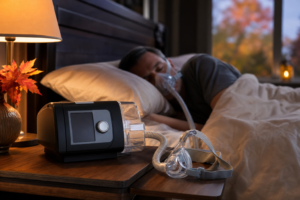
October Sleep Schedule Disruptions How Fall Holidays Affect CPAP Compliance
Understanding October’s Impact on Sleep Apnea Management October hits different for sleep apnea patients. While most people think of pumpkins and cooler weather, those managing their breathing at night face a specific challenge: the season actively works against treatment compliance. The shift from late summer into fall creates a perfect…
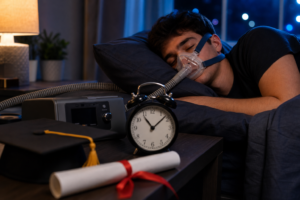
Medication Timing Adjustments When Your Sleep Schedule Changes
Understanding How Sleep Schedule Changes Affect Medication Effectiveness Why circadian rhythm disruptions impact sleep apnea treatment outcomes Your body doesn’t just run on a 24-hour clock. It’s more like an orchestra where every instrument needs to play in sync. When your sleep schedule shifts, that orchestration falls apart, and your…