Oral Appliance vs CPAP Key Differences to Discuss With Your Doctor
Choosing how to manage loud snoring or a sleep apnea diagnosis can feel like a big decision. Two options come up again and again in conversations with doctors: a CPAP machine and a custom oral appliance. Each one has fans, and each one has trade offs. The right choice depends on your health, your habits and your doctor’s advice, so a quick online verdict rarely helps.
This guide compares the two in plain terms. It looks at how each one works, how it feels at night, what upkeep looks like, how travel changes things, and what costs and follow up visits to expect. It also lists questions you can bring to your physician and your dentist. Good Night Sleep Devices is a sleep apnea and snoring practice in Solana Beach, California, where Dr. David F. Urich, DDS, makes custom oral appliances. That means the practice has a point of view on one side of this comparison. We will say so where it matters and keep the focus on helping you ask better questions.
One note before you read on. This article is general information and is not medical advice. Only a physician can diagnose sleep apnea, and only you and your care team can decide what fits your situation. If you have concerns about your breathing at night, please talk with your doctor or dentist.
What CPAP Is and How It Works
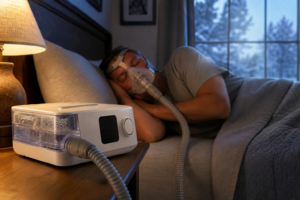
CPAP stands for continuous positive airway pressure. A small machine by the bed pushes air through a hose to a mask you wear while you sleep. The steady airflow is meant to keep the airway open. Your doctor sets the pressure based on your sleep study and your needs, and a sleep specialist or equipment provider usually helps with the setup.
The National Heart, Lung, and Blood Institute describes positive airway pressure machines as one of several approaches to sleep apnea, alongside lifestyle changes, oral devices, medicines and surgery. You can read its overview of sleep apnea treatment for a neutral summary. Many physicians treat CPAP as a common first step, and many people use it every night. That deserves saying plainly, because this article is not an argument against it.
CPAP comes with parts: the mask, the cushion, the hose, the humidifier chamber, filters and a power cord. Each part needs cleaning and replacing on a schedule. For some people this routine becomes automatic. For others it becomes a reason to skip nights. Neither reaction is a failing. It is simply information your doctor can use when the two of you review your plan, and it is one reason people ask about CPAP alternatives.
What an Oral Appliance Is and How It Works
An oral appliance for sleep is a mouthpiece worn at night. The type most people hear about is a mandibular advancement device. It holds the lower jaw slightly forward, which keeps the tongue and soft tissue from settling back toward the throat. The NHLBI notes that a dentist or orthodontist can fit an oral device for people who cannot use or tolerate a CPAP machine, and it describes more than one style of device.
At Good Night Sleep Devices, Dr. Urich makes a custom fitted oral appliance to your teeth and your bite. There is no mask, no hose and no cord. The practice says the fitting typically takes under 45 minutes at the office, and follow up visits come after the fitting so the fit can be checked and adjusted.
Professional groups address this option as well. The American Academy of Sleep Medicine and the American Academy of Dental Sleep Medicine have published joint guidance on oral appliance therapy. In general terms, it describes the appliance as an option that works alongside a physician’s diagnosis and a qualified dentist’s custom fitting, with ongoing follow up care. Ask your doctor how that guidance applies to you.
Not every mouthpiece is the same. A custom appliance is designed from impressions of your own teeth, while a stock product off a shelf is not. If you are comparing choices, the list of questions to ask before choosing an oral appliance can help you sort one from the other.
Comfort and the Nightly Experience
Comfort is where most people feel the difference between these two options. Because comfort is personal, what feels fine to one person may bother another. The notes below describe what people commonly mention, not what you will necessarily feel.
Living With a Mask and Hose
A CPAP mask needs to seal against your face, and the hose needs enough slack to let you turn over. Some people find that the air pressure feels strange at first. Others notice dry mouth or a stuffy nose, which a heated humidifier or a different mask style may help with. Side sleepers and restless sleepers sometimes spend time adjusting the hose and straps. Your equipment provider and your doctor can help with mask fit, and many people settle in after the first few weeks.
Living With a Mouthpiece
An oral appliance sits inside the mouth, so you feel it on your teeth and jaw instead of on your face. Some people notice extra saliva or a tight feeling in the jaw at first. Dr. Urich adjusts the appliance at follow up visits, and you should tell the practice early if something feels off. Honest feedback helps the fit. If jaw discomfort lingers, bring it up with your dentist and your doctor rather than waiting it out.
Neither device makes the nights effortless on day one. Both ask you to build a habit. The more useful question is which habit you can keep up most nights, because a device only helps when it is used as directed by your care team.
Travel and Convenience
Travel is where the difference shows up fast. A CPAP kit includes a machine, a hose, a mask, a power cord and often a water chamber. Many travelers pack it in a dedicated bag, check airline rules for medical devices, and plan for power outlets at the destination. Camping trips, long drives and places with unreliable power take extra thought. A travel checklist helps you make sure nothing gets left behind, no matter which device you use.
An oral appliance is small. It rides in a case that fits in a pocket or a carry on bag, and it needs no power. The practice describes it as travel friendly for that reason. You still need to keep it clean and store it with care. Ask the office how to protect it from heat, since some materials may not tolerate a hot car or a sunny windowsill.
Convenience also covers the small moments: a late night at a friend’s house, a hotel room with few outlets, or a quick weekend trip. With a mouthpiece there is less to set up. With a machine there is more to plan, but the plan becomes familiar with practice. Some travelers carry a note from their doctor about their device, especially when flying. Whichever option you choose, skipping nights while away is an easy habit to fall into, so decide ahead of time how you will keep your routine.
Cleaning and Upkeep
Every sleep device needs care, and the care routine is part of the real cost of using it. Follow the instructions that come with your own equipment and the advice of your care team. The lists below show the kinds of tasks people typically handle, not a replacement for those instructions.
Typical CPAP Routine
- Wash the mask and cushion regularly with mild soap, as the maker directs.
- Empty and clean the humidifier chamber, and refill it with the water type the maker recommends.
- Check the hose for moisture and wear.
- Replace filters, cushions and other parts on the schedule the supplier gives you.
Typical Oral Appliance Routine
- Rinse the appliance and brush it gently each morning, using the method your dentist shows you.
- Let it dry, then keep it in its case so it stays clean and protected.
- Avoid hot water, which may change the shape of some materials.
- Bring it to every follow up visit and dental checkup so Dr. Urich can look at it.
Both routines take a few minutes a day. The CPAP routine tends to involve more parts, while the appliance routine involves one item that sits in your mouth. If you want a deeper look at keeping equipment in good shape, our device care tips cover habits that apply to many types of sleep equipment.
Noise, Bed Partners and Your Sleep Space
Sleep is shared in many homes, so a device affects more than one person. Modern CPAP machines are fairly quiet, but you may still hear airflow, and a mask that leaks can add a hissing sound. A hose also takes up space on the bed. Some couples adapt quickly. Others find that the equipment changes how they sleep side by side.
An oral appliance makes no sound of its own and takes no space beside the bed. Bed partners often have useful observations, such as whether snoring has changed or whether breathing pauses seem to continue. Share those notes with your dentist and your doctor. They are not a diagnosis, but they give your care team a clearer picture of your nights.
Your habits in bed matter too. Some people lie on their backs and notice louder snoring, and some work on side sleeping with guidance from their care team. Our article on sleep position training explains common approaches. Talk with your doctor before you change how you sleep, because the right approach depends on your health.
Think about the room as well. A bedside table with a machine, a humidifier and a water bottle is a different setup from a small case on the nightstand. Neither setup is wrong. Picture your own bedroom and your own routine, and ask which setup you would keep using on a tired Tuesday night.
Follow Up Care and Adjustments
Neither option ends when you leave the first appointment. A CPAP user often has follow up with a physician or an equipment provider. Machines can record usage data, and your care team may review it to see how many nights you used the device. Pressure settings, mask styles and supplies may change over time.
An oral appliance needs follow up as well. Dr. Urich checks the fit after the fitting visit, and adjustments may be made to improve comfort. A dentist also watches for changes in the teeth and the bite over time, which is one reason regular dental exams matter for oral appliance wearers. The practice includes two follow up visits in its one time fee. Your physician may also want to review how you are doing, and may ask about further testing. That coordination between dentist and doctor is a central part of dental sleep care.
If something stops working for you, say so. A mask that no longer seals, a jaw that feels sore, a partner who notices that nothing has changed: each is a reason to call your care team rather than quietly stop using the device. Early feedback usually leads to a simpler fix.
Cost, Insurance and Fees
Cost is easy to compare badly. A CPAP setup involves the machine and the mask at the start, then replacement parts and supplies over time. An oral appliance involves a fee for the appliance and the visits that come with it, plus regular dental checkups. Prices and coverage differ by plan and provider, so ask your equipment supplier and your dentist for itemized quotes, and ask your insurer what it covers for each option.
At Good Night Sleep Devices, the practice charges a one time fee of $1,950, with two follow up visits included. You wear the device for at least 30 days with Dr. Urich, and a full refund applies if you are not satisfied within that time. Insurance may cover some or all of the cost, though coverage varies by plan. Our insurance coverage guide lists questions that help when you call your insurer.
When you compare, look at the whole picture instead of the first bill. Write the numbers side by side and include these items:
- The upfront cost of the device or machine.
- Replacement parts or supplies over the next few years.
- Follow up visits, adjustments and any repairs.
- Dental checkups and any testing your physician requests.
- What your plan pays, what it excludes and what paperwork it needs.
A clear table on paper makes the conversation with your doctor and your dentist much easier. It also keeps the decision from resting on price alone, which is rarely the whole story.
What Professional Guidance Says
Medical and dental groups publish guidance, and that guidance is updated over time, so check current sources and ask your own doctor which version applies to you. The joint guidance from the American Academy of Sleep Medicine and the American Academy of Dental Sleep Medicine covers oral appliance therapy. The NHLBI page on treatment lists oral devices among the approaches to sleep apnea. For a broader plain language overview, MedlinePlus, a service of the National Library of Medicine, offers a sleep apnea overview that you can read before an appointment.
Across these resources, a few shared ideas show up. A physician makes the diagnosis. The physician and the patient choose a therapy together. A qualified dentist provides a custom oral appliance when that route is chosen. Follow up care matters, and so does honest feedback about how the device feels. Those ideas shape how Good Night Sleep Devices works with patients, and they are a good checklist for any provider you visit.
Be careful with any source, including a practice website, that promises a result. Sleep is personal, and responses to therapy differ. Good information helps you ask questions. It does not tell you what will happen in your own body.
Why People Ask About Each Option
People arrive at this comparison from different places. Some have a diagnosis and a CPAP machine in a closet. Some have a partner who complains about snoring and no diagnosis at all. Some are curious because a friend mentioned a mouthpiece. Here are common reasons people raise the topic with their care team.
Reasons People Ask About an Oral Appliance
- The mask or hose feels uncomfortable, or sleep keeps getting interrupted by equipment.
- Frequent travel makes a large kit hard to manage.
- They want a quiet option with no power cord.
- They are looking at anti snoring devices and want to understand which kinds are custom made.
Reasons People Stay With CPAP
- Their physician recommends it based on sleep study results.
- They already use it comfortably and see no reason to change.
- Their health history makes another option unsuitable, as judged by their doctor.
It is also common to use more than one tool. Your doctor may suggest combining approaches, or may suggest a different mix over time. If you are browsing the wider field, our page on alternative sleep devices shows how the practice talks about other choices. The point is not to win an argument between devices. The point is to find a plan you can follow and your physician supports.
Questions to Bring to Your Appointments
Questions for Your Doctor
Your physician makes the diagnosis and guides the overall plan, so start there. Bring a notebook, a list of symptoms and any notes from a bed partner. These questions can open the conversation:
- What did my sleep study show, and what does that mean for my therapy options?
- Is CPAP the right first step for me, and why?
- Would an oral appliance be reasonable for my situation?
- If I try an oral appliance, how will we check whether it is working?
- Will I need follow up testing, and how often?
- Do you work with a dentist who makes custom sleep appliances?
- Are there health conditions or medicines that affect which option is safer for me?
- What should I do if I cannot tolerate the first option?
Questions for Your Dentist
A dentist who makes sleep appliances should be able to explain the process in plain words. Ask about training, the steps of the fitting, the follow up schedule and the costs. These questions help:
- Do you make custom appliances from impressions of my own teeth?
- How long does the fitting take, and what happens at each follow up?
- How will you check my teeth, bite and jaw over time?
- How do you work with my physician?
- What is the full cost, and what is included?
- What happens if I am not satisfied?
At Good Night Sleep Devices, Dr. Urich is glad to answer each of these, and the practice describes a refund if you are not satisfied within the first 30 days. A dentist made appliance starts with a conversation like this one.
How to Weigh the Two Options at Home
Before your appointments, spend an evening on a simple review. You are not choosing a device on your own. You are collecting your own facts so that your doctor and dentist have more to work with. Try this short exercise with a pen and paper.
- Write down what bothers you most about your nights right now, such as noise, tiredness, dry mouth or a partner’s complaints.
- List what you already know about your diagnosis, including any sleep study results and the date of the test.
- Note how you travel, how many people share your bedroom and how much time you can give to cleaning and care each day.
- Mark which of your current habits might help or hurt, such as alcohol in the evening, late meals or an irregular bedtime.
- Write the questions from the lists above that matter most to you.
Bring that page to your appointments. It keeps the visit focused on you instead of on a general sales pitch. It also shows your care team where you need the most support, whether that is a better mask fit, a clearer cost estimate or a plain answer about what an appliance involves.
Keep your expectations realistic. A device is one part of caring for your sleep. Good habits, regular medical follow up and honest reporting of symptoms all play a role. If your physician has asked you to use a particular therapy, keep using it until you have talked about a change together.
What a Consultation at Good Night Sleep Devices Looks Like
If you decide to ask about an oral appliance, the first visit is a conversation. Dr. Urich reviews your sleep history, looks at your airway and talks with you about how you sleep. He works with your physician, and he asks about any testing or diagnosis you already have. He also wants to hear what your bed partner has noticed.
The visit covers the basics: what a custom appliance is, how it is made to your teeth and bite, how the fitting works, and what follow up looks like. The practice says the fitting itself typically takes under 45 minutes. After that, follow up visits let Dr. Urich check the fit and make adjustments. You can also ask about fees, insurance and the 30 day refund terms, so nothing about the cost is a surprise.
Office hours are Tuesday and Thursday from 8:00 AM to 5:00 PM, and Wednesday from 8:00 AM to noon. Friday through Monday, please call ahead. You can read about the practice on its Schedule page or use the form on the site to ask a question. If you are in San Diego County and curious how the practice serves your area, the page about a custom snoring solution shows one example.
Staying on Track After You Choose
Choosing a device is the start of the process, not the end. The first weeks set the pattern, and small problems are easier to fix early than late. A little structure helps you notice what is working and what is not, and it gives your care team something concrete to review at your next visit.
A Simple Four Week Check In
Whichever device you use, keep a short log for the first month. Spend a minute on it each morning and share the notes at your follow up visits. Useful items to record include:
- How many hours you wore or used the device.
- Any soreness in the jaw, teeth, face or nose, and when it faded.
- How you felt on waking, in plain words.
- What a bed partner noticed about noise or breathing.
- Any problems with cleaning, travel or storage.
At the end of each week, read the notes over and circle anything that repeats. A repeated problem is a good reason to call your dentist or equipment provider. A pattern that improves is worth mentioning too, because it tells your care team what to leave alone. Keep the log honest. It is a tool for you and your care team, not a report card.
If Your First Choice Does Not Work Out
Many people try one option, find it is not a good fit, and wonder whether anything else is open to them. It usually is, and a change of plan is a normal part of sleep care. A CPAP user who struggles with the mask might talk with the equipment provider about other mask styles, or with the physician about other therapies. An oral appliance wearer who has jaw soreness might return for adjustments, or discuss other paths with the doctor.
What matters is that you tell someone. Stopping quietly leaves your care team guessing, and it can leave your sleep problems unaddressed. Keep notes on what bothered you: the time of night, the part of the device, the way you felt in the morning. Specific notes lead to specific fixes.
It also helps to keep your physician informed whenever you change devices. Your doctor can decide whether follow up testing makes sense and whether any other part of your plan should change. Your dentist and your doctor are meant to work as a team, and you are the person who connects them.
Helping a Partner or Family Member Support Your Choice
The people who share your home can make a difference. A partner who understands why you are trying a device is more likely to cheer you on than to tease you about the mask or the mouthpiece. Invite them to come to a visit, or share the notes you took. They may remember details of your nights that you do not.
You can also agree on small signals. Ask your partner to tell you, kindly and in the morning, if snoring or pauses in breathing seem to continue. Share that with your care team. These observations are not a diagnosis, but they help your doctor and dentist decide what to check next. Over time, a steady routine and open conversations at home make any sleep plan easier to keep.
Frequently Asked Questions
Is an oral appliance the same as a CPAP machine?
No. A CPAP machine pushes air through a hose and mask, and it needs a power source. An oral appliance is a custom mouthpiece that fits in the mouth and holds the lower jaw slightly forward. It has no mask, hose or cord. They are different tools, and your physician can help you decide which one suits your situation.
Can I switch from CPAP to an oral appliance on my own?
Please do not stop a therapy your doctor prescribed without talking with your doctor first. If you are thinking about a change, bring it up at your next visit or call the office. Your physician may want to review your sleep study and plan follow up testing. Dr. Urich can then work with your physician on the dental side of the plan.
Does insurance cover an oral appliance?
Insurance may cover some or all of the cost, but coverage varies by plan. The best step is to call your insurer, ask what it covers and write down the answers. The practice can walk you through its fees, and our guide to insurance questions can help you prepare for the call.
How long does the fitting take?
The practice says the fitting typically takes under 45 minutes at the office. Follow up visits come after the fitting so that Dr. Urich can check the fit and make adjustments. Plan to ask questions at every visit, and tell the team early if anything feels uncomfortable.
Do I need a sleep study first?
Only a physician can diagnose sleep apnea, and a sleep study is one of the tools doctors use. Dr. Urich asks about any testing or diagnosis you already have and works with your physician. If you have snoring concerns but no diagnosis, a conversation with your doctor is a sensible first step. The practice can explain what it asks patients to bring.
What if I am not satisfied with the appliance?
The practice offers a full refund if you are not satisfied within the first 30 days of wearing the device with Dr. Urich. The one time fee of $1,950 includes two follow up visits. Ask the office to explain the terms before you start so you know exactly what to expect.
Will an oral appliance affect my teeth or bite?
Dentists watch for changes in the teeth and the bite when someone wears an oral appliance, which is one reason follow up visits and regular dental exams matter. Dr. Urich checks the fit at follow up visits, and you should report jaw soreness or a bite that feels different. Your dentist and your doctor can decide on changes together.
Can people use both a CPAP machine and an oral appliance?
Some people use more than one tool, for example at home and while traveling. Whether that suits you is a question for your physician. Do not combine or swap devices without medical guidance.
Next Steps
Comparing an oral appliance with CPAP is easier when you know your own priorities. Start with your doctor, bring your notes and ask the questions that matter most to you. When you are ready to talk about a custom oral appliance, Good Night Sleep Devices is here to help. Dr. Urich, DDS, and the team will review your situation, answer your questions and explain what comes next. This article is general information and is not medical advice, so please talk with your own dentist or doctor about your sleep. Schedule a consultation at the Solana Beach office, or call to ask about a time that fits your week.
Our Blogs
Our Latest Content
Explore our blog for expert insights, patient experiences, and the latest updates on complete sleep apnea treatment.

Snoring vs Sleep Apnea Signs to Discuss With Your Doctor and Dentist
Loud nights get attention fast. A partner nudges you, a roommate hears it through the wall, or you wake with a dry throat and wonder what happened. Snoring and sleep apnea often come up in the same conversation, and many people use the two words as if they mean the…
Questions to Ask Before Choosing an Oral Appliance for Snoring or Sleep Apnea
Choosing a device for snoring or sleep apnea is a big decision. You will wear it every night, sometimes for years, so it helps to know what you are saying yes to. A good appointment is not only about what the dentist tells you. It is also about what you…
Device Humidifier Settings for Fall and Winter What Changes You Need to Make
Why Humidifier Settings Change When Temperature Drops Your sleep apnea device has been working great all summer and fall. You’re hitting your therapy goals, your partner stopped mentioning snoring, and you’ve finally hit that sweet spot with your settings. Then November hits. Suddenly your throat feels drier. You’re waking up…