
Why August Schedule Transitions Undermine Sleep Apnea Treatment Compliance
How Seasonal Schedule Changes Disrupt CPAP Routine
The impact of back-to-school schedules on nightly device use
August hits different when you’ve got kids heading back to school. Teachers know it. Parents know it. What many people don’t realize is that sleep apnea patients know it too, and not in a good way.
The shift from summer to fall isn’t just about buying new backpacks and pencils. It fundamentally rewires how families structure their evenings. Summer means flexibility, later bedtimes, and inconsistent wake times. August means alarm clocks are back, morning routines are tight, and bedtime becomes non-negotiable. But here’s the thing: that rigid schedule only works if you stick to it.
CPAP therapy success depends on consistency. Your device needs the same treatment window every night to build therapeutic momentum. When you’ve spent three months drifting to bed at 11 PM on some nights and midnight on others, suddenly being forced into a 10 PM routine creates friction.
Some patients push back (metaphorically and literally, by skipping nights). Others rush through setup, skip the ramp feature, or use their device inconsistently because the new timing feels unnatural.
What we see in San Diego and the broader region is that back-to-school months bring a spike in compliance issues. Patients report skipping one or two nights a week because “life got busy.” That might sound minor, but missing 15-20% of your therapy nights significantly undermines your treatment effectiveness. Your airway needs consistent nightly support to improve stability. Miss three nights in a row, and you’re essentially resetting your progress.
Shift work transitions and their effect on consistent therapy timing
Seasonal job transitions compound the problem, especially in industries tied to academic calendars or summer tourism seasons. If you work in hospitality, education, or retail in Southern California, August often brings schedule shifts. Summer evening shifts become fall morning shifts, or part-time summer work transitions to full-time fall positions.
Your CPAP device doesn’t care about your job schedule, but your body does. When your sleep window moves from 11 PM to 7 AM (summer) to 10 PM to 6 AM (fall), your circadian rhythm needs time to adjust. Add a therapy device to that mix, and some patients skip nights rather than force their body to adapt faster. Others use their device but with inconsistent pressure settings because they’re trying to make it work with a sleep schedule their body hasn’t fully accepted yet.
The real damage happens quietly. Irregular sleep patterns amplify existing sleep apnea symptoms. Your airway already has structural challenges that your device addresses through consistent nightly pressure.
When you’re fighting both schedule changes and untreated apnea, your sleep quality tanks. And poor sleep quality during a transition period means you’re less likely to maintain your therapy commitment, which creates a downward spiral.
Travel and vacation patterns that interrupt established habits
Late summer means celebrations. Family trips to the coast, visits from relatives, weekend getaways before school starts. These aren’t bad things, but they absolutely disrupt treatment routines.
Traveling with CPAP equipment requires planning. You need to pack your device, remember your mask, carry adapters for different electrical outlets, and navigate airport security with medical equipment. Some patients do it seamlessly.
Others view the hassle as permission to skip nights. A week of vacation becomes a week without therapy, and by the time you’re home, reestablishing your routine takes effort.
What makes August particularly challenging is the concentration of travel. Multiple family events, school supply trips, and summer vacation extensions all compress into a narrow window. Each interruption is a small one, but collectively they create month-long therapy gaps that undermine everything you’ve worked toward.
How irregular sleep windows delay therapeutic benefits
Your sleep apnea treatment isn’t like taking an antibiotic. You can’t skip doses and expect to catch up. Therapy works through consistent nightly application. Your airway remodels, your oxygen levels stabilize, and your daytime symptoms improve when you use your device reliably.
When schedule changes create irregular sleep windows, your body never settles into stable sleep architecture. You’re not getting the consistent, quality sleep your therapy is designed to provide. Some nights you’re in bed at 10 PM, others at midnight. Some mornings you wake at 5:30 AM, others at 7 AM. Your device can’t optimize for a moving target.
The result? Therapeutic benefits plateau or regress. Patients report that snoring returns, daytime tiredness persists, and the device that felt transformative in June feels ineffective by September. That’s not the device failing. That’s inconsistency undermining the treatment’s effectiveness. Understanding this connection is critical because it shows why ongoing support during isn’t optional, it’s essential.
The Physiological Consequences of Missed Treatment Days
Understanding apnea event rebound during treatment gaps
When you miss even a few nights of CPAP therapy during August’s chaotic schedule transitions, your body doesn’t just pause where it left off. Instead, apnea events come roaring back with a vengeance. This phenomenon, called apnea event rebound, is your airway’s way of reverting to its untreated state the moment consistent pressure support disappears.
Think of it this way: your airway has spent weeks or months adapting to nightly positive pressure. That muscle memory is real. But it’s fragile.
Skip three nights for a family camping trip or graduation celebrations, and your airway forgets what it learned. The collapse patterns that CPAP was preventing resurface almost immediately, often with the same severity (or worse) than before treatment began. Your breathing literally becomes disrupted again, even if you’ve been compliant for months.
What’s particularly troubling is that patients often don’t notice the rebound happening during their vacation. They’re sleeping differently anyway because of travel stress, unfamiliar beds, and schedule chaos. By the time they reconnect their equipment after the disruption ends, damage has already accumulated. Those missed nights weren’t just lost therapy time, they reset portions of the therapeutic progress you’d built.
How inconsistent therapy affects oxygen saturation recovery
Oxygen saturation is the percentage of oxygen your blood carries, and it’s one of the most critical markers of sleep apnea severity. When you have untreated apnea, your oxygen saturation drops repeatedly throughout the night, sometimes falling into the 80s or even lower (normal is above 95 percent during sleep). CPAP therapy keeps your airway open, preventing those dangerous dips.
But here’s what happens when consistency breaks down during August transitions: your oxygen recovery time lengthens. Early in your treatment, CPAP trained your cardiovascular system to maintain stable oxygen levels. With consistent nightly use, your body becomes more efficient at bouncing back from any momentary oxygen fluctuations.
Skip treatment for several nights, and that efficiency deteriorates. Your oxygen saturation dips take longer to recover, meaning your heart works harder during sleep to compensate.
Over the course of a disrupted month (think graduation week plus family visits plus travel), your average nightly oxygen saturation can drop measurably compared to months when your schedule stays consistent. This isn’t just uncomfortable. Repeated low oxygen events stress your cardiovascular system, increasing your heart rate and blood pressure during sleep. Understanding how therapy helps explain why even “brief” treatment gaps carry real physiological consequences.
The neurological impact of interrupted CPAP compliance
Your brain is exquisitely sensitive to sleep fragmentation and repeated oxygen disruptions. When apnea events resume after a treatment gap, your central nervous system responds with micro-arousals (brief awakenings you don’t consciously remember). These arousals shatter sleep architecture, keeping you locked in lighter sleep stages and preventing deep, restorative sleep.
The neurological fallout appears as daytime cognitive decline. Patients who’ve maintained consistent CPAP use report sharp thinking, better memory, and improved focus. But reintroduce schedule disruption and apnea events, and those cognitive benefits evaporate surprisingly fast.
Some patients notice fuzzy thinking within just days of stopping treatment. This isn’t psychosomatic. Brain imaging studies show that fragmented sleep from untreated apnea genuinely impairs prefrontal cortex function, the region responsible for executive function, decision-making, and emotional regulation.
During August’s transitions especially, many patients are already managing stress from graduation, moving, or major life changes. Layering interrupted sleep on top of that emotional load compounds the neurological strain. Your brain becomes progressively less capable of managing the very stressors that disrupted your routine in the first place.
Long-term cardiovascular risks from August disruption patterns
The cardiovascular consequences of repeated apnea event rebound extend far beyond August itself. When your treatment consistency fractures seasonally, you’re essentially cycling between treated and untreated states multiple times per year. Each cycle stresses your heart in specific ways.
Untreated apnea events trigger sympathetic nervous system activation. Your heart rate spikes, blood vessels constrict, and blood pressure surges. During consistent CPAP use, this stress cycle is controlled.
But introduce treatment gaps, and those cardiovascular surges resume nightly. Over months and years, this repeated stress accelerates atherosclerosis development and increases your risk for heart attack and stroke.
Research shows that sleep apnea patients who maintain consistent treatment have significantly better long-term cardiovascular outcomes than those with interrupted compliance patterns. August disruptions might feel temporary, but from a cardiovascular standpoint, they’re cumulative. Each year of August-related treatment gaps adds measurable risk. This is why ongoing care year-round, not just during “convenient” months.
Why Patients Abandon Treatment During Transition Periods
Motivation barriers when routine structure changes
Here’s the thing about August: it’s not just a calendar date. It’s the moment when everything people built rhythm around gets dismantled. Kids finish school. College students pack up apartments. Work schedules shift. Travel happens. And somewhere in that chaos, the routine that made nightly CPAP therapy feel like brushing teeth suddenly becomes optional-feeling.
Motivation doesn’t exist in a vacuum. It lives inside structure. When you’ve been using your device consistently for months, your brain has automated the behavior. You come home, you prepare your equipment, you sleep with it. That automation is powerful. But the moment your evening routine fractures, that automated pathway breaks too.
August disruptions don’t feel temporary to the brain, even though logically you know school starts again in September. The loss of structure creates what researchers call a “motivation gap.” Without the anchoring habits (like coming home to the same bedroom, eating dinner at the same time, going to bed at a predictable hour), patients lack the environmental cues that previously triggered treatment compliance. You can’t just rely on willpower to remember your device when everything else is different.
This is especially true for patients in the San Diego region dealing with seasonal changes that affect family routines. Vacations, family gatherings, and temporary living situations eliminate the consistency that sleep apnea treatment requires. Patients report that after just three to five days without their usual evening routine, restarting therapy feels like starting from scratch psychologically.
Social pressures and lifestyle conflicts with therapy schedules
August brings celebrations. Weddings, reunions, trips to the beach, late dinners with visiting relatives. These aren’t small inconveniences. They’re the textures of a good life. And they directly conflict with the kind of rigid scheduling that effective sleep apnea treatment demands.
Consider a realistic August scenario: you’re visiting family out of state for two weeks. Everyone’s staying up later. Meals happen at different times.
You’re sleeping in an unfamiliar bed. Your device requires specific pressure settings, a humidifier routine, and consistent nightly use. Suddenly, mentioning to relatives that you need to set up your therapy equipment feels awkward or inconvenient.
Maybe they’re planning activities. Maybe there’s nowhere private to clean and prepare your device properly.
Social pressure isn’t always active (nobody’s forcing you to skip treatment). It’s usually passive. It’s the environment and the competing demands.
You’re already managing luggage, coordinating schedules with family, and trying to be present. Adding CPAP therapy feels like one more thing. And when you’re surrounded by people who don’t have sleep apnea, who are staying up late and sleeping however they want, your treatment suddenly feels like a restriction rather than a health necessity.
This dynamic intensifies for patients who haven’t fully internalized why consistent treatment matters. The connection between nightly therapy compliance and daytime functioning isn’t always obvious in week one or month two. But August transitions reveal the truth quickly, and many patients choose short-term social flexibility over long-term health maintenance.
Psychological resistance to restarting after disruptions
Missing one night of therapy is just one night. Miss seven nights, and something shifts psychologically. There’s guilt. There’s the creeping feeling that you’ve “failed” at treatment. And there’s resistance to restarting because restarting means confronting that failure.
This is deeply human. If you’ve had a week off from your device and you’re sleeping somewhat okay without it, your brain makes a deal with itself: “Maybe I don’t actually need this. Maybe the sleep apnea wasn’t as bad as the professional said.” This is rationalization, but it feels true in the moment.
Restarting therapy after a disruption is harder than maintaining consistency because it requires you to re-engage with the discomfort of adaptation. Remember how the first few weeks of therapy felt slightly uncomfortable? Full face mask pressure, different breathing patterns, sleeping with equipment.
Patients who’ve maintained treatment continuously don’t think about that anymore. But someone restarting after a two-week break has to go through that acclimatization period again, and they’re less motivated to push through it the second time.
Psychological research on habit formation shows that interruptions longer than 14 days create what’s called “habit extinction.” The neural pathway that made therapy automatic starts degrading. You’re essentially starting fresh psychologically, even if you’re using the same device and the same settings.
The ‘reset effect’ and why missed weeks feel harder to recover from
There’s a name for what happens after extended treatment interruptions: the reset effect. Your body, your sleep patterns, and your neurological response to therapy all recalibrate during breaks. When you resume, you’re not picking up where you left off. You’re starting a new cycle.
During missed treatment weeks in August, sleep apnea symptoms return. Snoring comes back. Sleep quality drops.
Daytime fatigue increases. Patients often feel worse than they did before starting therapy. And paradoxically, this makes restarting harder, not easier.
You’d think experiencing worse sleep would motivate you to resume treatment immediately. Instead, many patients feel discouraged, assuming they need different settings, a new device, or professional reassessment.
The reality is simpler: your body just needs a few nights to readapt to the therapy pressure. But patients don’t always understand that timeline. They think something’s wrong with their current approach, so they delay restarting or assume they need professional intervention when consistency is actually the answer. Working with a sleep assessment professional before August transitions can clarify these expectations and reduce post-vacation hesitation.
Practical Strategies to Maintain Compliance Through August Changes
Portable and travel-friendly device options for schedule flexibility
August often means travel. Whether you’re heading to the beach in Southern California, visiting family across state lines, or attending back-to-school events, your sleep apnea treatment shouldn’t take a backseat. The good news? Modern devices have come a long way in portability.
If you’re currently using a CPAP machine, consider asking your sleep specialist about smaller, lightweight models designed specifically for travel. These units typically weigh under five pounds and can fit into carry-on luggage. Battery-powered options exist too, which means you’re not completely dependent on finding an outlet in unfamiliar hotel rooms or vacation rentals.
Oral appliances offer another advantage during schedule transitions. These custom-fitted devices are compact, discreet, and require no power source at all. When traveling between San Diego and neighboring regions, or managing erratic schedules that make consistent setup difficult, an oral appliance can feel less cumbersome than equipment that demands specific environmental conditions. If you’re curious about how these alternatives work, our guide on custom devices walks through the mechanics.
The key isn’t abandoning treatment because logistics feel messy. It’s choosing a device type and portable setup that actually fits your life during August’s chaos. Talk with your provider about what works best for your specific situation.
Pre-transition planning frameworks for predictable schedule shifts
August changes rarely arrive without warning. School starts on specific dates. Summer camps end. Work schedules shift. These predictable milestones are your opportunity to plan.
Start planning at least two weeks before your schedule changes. Map out exactly what your new routine will look like: when you’ll wake up, when you’ll sleep, travel days, and any temporary disruptions. Then work backward.
If your new schedule means going to bed an hour earlier, gradually shift your treatment time now rather than making a jarring change on day one. This isn’t just comfortable—it’s more likely to stick.
Document your current treatment settings and effectiveness before August hits. How many hours are you averaging per night? What’s your apnea-hypopnea index? When you transition to a new schedule, you’ll have a baseline for comparison. If your symptoms worsen after the shift, you’ll know something concrete changed rather than guessing.
Create a written plan (yes, actually write it down) that includes your new sleep window, device setup location in your new environment, and how you’ll handle travel days. Share this plan with someone who supports your treatment—a spouse, family member, or healthcare provider. Accountability starts here.
Building accountability systems that adapt to changing routines
Compliance during schedule changes depends heavily on external support structures. You can’t willpower your way through August if you’re isolated in your effort.
Identify an accountability partner before transition week arrives. This person should understand your sleep apnea condition and your treatment goals. Check in with them weekly throughout August about your compliance. A simple text that says “used my device for six hours last night” creates momentum. Skipping those check-ins makes it easier to rationalize skipping treatment.
If family support feels awkward, consider the professional accountability offered through comprehensive care. Practices that provide ongoing support often build in regular check-ins specifically designed around transition periods. These aren’t judgmental calls—they’re practical touchpoints that help you stay on track when circumstances get messy.
Your accountability system should be flexible. If your partner typically reminds you about your device and they’re traveling during August, transfer that responsibility to a different family member or set a phone alarm. Rigid systems fail when schedules shift. Adaptive ones survive.
Digital reminders and tracking tools that accommodate new schedules
Your smartphone can become your treatment ally during August transitions. Most modern CPAP machines sync with apps that track usage, therapy time, and effectiveness. Use these actively.
Set reminders that match your new schedule, not your old one. If you’re shifting from a 10 PM bedtime to 9 PM, your app reminder needs to shift too. Many devices allow you to program multiple reminders at different times—use this feature if August’s schedule varies by weekday.
Digital tracking serves another purpose: it gives you real data. Instead of wondering whether schedule changes affected your sleep apnea treatment effectiveness, you can see exactly what happened. Did you average five hours per night instead of your usual seven? Track it. Did apnea events spike on days you missed treatment? The data shows you clearly.
Some San Diego-area practices and specialists integrate patient tracking into their own systems, allowing remote monitoring throughout transition months. This bridges the gap between your personal tracking and professional oversight, creating continuity even when your routine feels chaotic.
Working With Your Sleep Specialist During Transition Months
Timing medication adjustments before major schedule changes
Here’s the thing about August transitions: they don’t announce themselves politely. Between back-to-school schedules, vacation timing, and work changes, the shift happens fast. If you’re taking any medications alongside your sleep apnea treatment, this matters more than you might think.
Medication timing directly impacts your sleep quality and how well your treatment works. Some medications affect sleep architecture, while others influence the severity of your apnea events. When your sleep schedule shifts dramatically, the timing of these medications becomes misaligned with your actual sleep window. If you normally take a sleep aid at 10 PM but August has you sleeping from midnight to 8 AM, that medication is hitting your system at the wrong point in your cycle.
Talk to your clinician about this before your schedule changes, not after. A medication that worked perfectly during your regular routine might need adjustment during transition periods. Your specialist can help you figure out whether shifting the timing, adjusting the dose, or temporarily modifying the approach makes sense for your specific situation. This isn’t something to guess on.
Some patients find that certain medications amplify their apnea symptoms during inconsistent sleep patterns. Others notice that medication effectiveness drops when sleep is fragmented or delayed. Your prescribing physician needs to know about your summer schedule changes so they can anticipate these issues rather than waiting for you to report problems mid-August.
Discussing temporary setting modifications with your clinician
Your CPAP pressure settings or oral appliance configuration is calibrated for your regular sleep pattern. When that pattern shifts, the device itself might need tweaking. This is where working directly with your sleep specialist becomes essential.
During your regular routine, you might tolerate a specific pressure level comfortably because your body expects it at consistent times. But introduce irregular sleep, earlier wake times, or fragmented nights, and that same pressure can feel jarring or less effective. Some patients report increased mask leakage or difficulty exhaling when their schedule becomes chaotic, even though nothing about their anatomy changed.
Before August hits, schedule a consultation with your clinician to discuss what modifications might help during transition months. Some settings can be temporarily adjusted to improve tolerance during high-stress or schedule-changing periods. Your specialist might recommend a softer ramp feature, adjusted humidity levels, or modified pressure curves that account for the fact that you’re getting sleep in different quantities and at different times.
The key word here is temporary. These aren’t permanent changes. Once your routine stabilizes, you’ll likely return to your standard settings. But having a plan in advance means you’re not troubleshooting equipment problems while also managing family schedules and summer logistics.
Follow-up protocols that account for increased non-compliance risk
August is when patients stop using their devices most frequently. Your sleep specialist knows this. That’s why proactive follow-up scheduling during transition months is critical.
Instead of waiting for your regular quarterly check-in, ask your clinician about more frequent touch-bases during August and early September. This might mean a brief phone call in mid-August, an in-clinic visit before school starts, or a quick equipment check to ensure everything’s functioning properly. These aren’t lengthy appointments, but they serve an important purpose: they keep you accountable and catch compliance issues before they become major problems.
Modern sleep practices often track your usage data remotely. If you’re using equipment with wireless connectivity, your specialist can see whether you’re actually wearing your device during this high-risk period. When they notice a drop-off, they can reach out proactively rather than assuming everything is fine.
Some clinics in the San Diego area, including sleep device specialists, build transition-month protocols into their patient care plans. This means you’re not caught off guard by the August slump. Your provider expects it and has systems in place to support you through it.
Identifying personalized triggers unique to your summer transitions
Not everyone struggles with their sleep apnea treatment in the same way during August. Your specific triggers might be completely different from your neighbor’s.
Maybe your disruption stems from vacation travel. Perhaps it’s the stress of kids being home. For some patients in our region, it’s the heat affecting mask comfort. Others find that social obligations and later bedtimes are the real culprits. Work with your clinician to identify what specifically derails your compliance each summer.
Once you know your triggers, you can plan around them. If travel is your problem, discuss portable solutions before you leave town. If stress is the issue, talk about whether ongoing support during high-pressure periods might help. Your sleep specialist can’t help you manage something they don’t know about. Share your challenges honestly, and work together on realistic solutions.
Building Resilience: Long-Term Compliance Beyond August
Creating flexible routines that accommodate seasonal variations
The biggest mistake people make during schedule transitions is trying to maintain the exact same routine year-round. It doesn’t work. What works in January when your schedule is locked down won’t work in August when everything shifts. The key is building flexibility into your treatment structure, not abandoning structure altogether.
Think of your CPAP routine like a travel-friendly device setup. You wouldn’t pack the same way for a beach trip that you would for winter camping, right? Similarly, your sleep therapy needs seasonal adaptation. If you’re typically using your device at 10 PM but August brings late celebrations and social events, establish a backup window. Maybe that’s 11 PM on certain nights, or an earlier session at 8 PM on others. The point isn’t perfection, it’s consistent therapy hours per week, not per night.
For patients in the San Diego region and throughout Southern California, summer travel is often part of August. Rather than viewing travel as a compliance killer, build it into your plan. Know where your device goes when you’re celebrating at a family gathering.
Keep your battery charged. Have backup supplies in your car. These small logistics mean the difference between three weeks of lapsed therapy and three weeks of uninterrupted treatment, even if the timing varies.
Reframing therapy as non-negotiable health maintenance, not rigid habit
Here’s the uncomfortable truth: most people who struggle with compliance during August are treating their device like a habit they can negotiate with. They think “I’ll skip tonight because of the party, and I’ll make it up later.” This mental framework is the problem. Your treatment isn’t optional weekend behavior, it’s medical maintenance.
The research on sleep apnea effectiveness is clear. When you miss even three consecutive nights of therapy, your airway collapses resume their old patterns. Your daytime symptoms return. The pressure settings that worked so well become less effective because your body adjusts back to untreated patterns. Patients often describe it as “restarting from scratch” after a compliance gap.
Reframe August differently. This isn’t about being rigid or boring. It’s about protecting something essential.
Your treatment device is keeping your heart working properly during sleep. It’s preventing the micro-arousals that destroy your daytime function. During graduation season and summer transitions, remind yourself: this therapy isn’t getting in the way of celebration.
It’s making sure you’re healthy enough to actually enjoy those celebrations without exhaustion dragging you down the next day.
Community support and peer accountability during vulnerable periods
You’re not the only person struggling with sleep apnea compliance in August. Your family members see it. The ongoing support, and peer accountability is part of that.
Tell your partner, roommate, or close family member what you’re managing during August. Make it specific. Say “I’m working to keep my treatment consistent even though my schedule is changing.” Most people respond positively when they understand what you’re doing and why.
They become allies instead of obstacles. If you’re traveling for celebrations, let them know you need 20 minutes for your therapy before bed. Most families find this perfectly reasonable once they understand it’s medical, not preference.
Connect with other patients too. Our blog and community resources show you’re not isolated in this struggle. Hearing from others about how they navigate August transitions normalizes the challenge and gives you practical strategies from real experience.
Recovery protocols when compliance lapses occur
Lapses happen. You skip a week. Maybe two. Maybe circumstances genuinely made treatment impossible for a stretch. Here’s what matters: what you do next. The patients who recover compliance best don’t spiral into guilt. They restart immediately and adjust their expectations.
If you’ve had a lapse, restart therapy that night, even if it’s awkward timing. Resume your regular settings unless your specialist recommends adjustments. Don’t try to “catch up” with longer sessions, that’s not how apnea therapy works.
Your airway needs consistent nightly protection going forward, not compensatory sessions. Schedule a check-in with your specialist to review what happened during August and adjust your approach for next year.
The difference between someone who overcomes August challenges and someone who abandons treatment altogether comes down to resilience, not willpower. Build flexibility into your routine, treat therapy as non-negotiable health maintenance, lean on your support network, and know exactly how to restart if life disrupts your schedule. August ends.
Your sleep apnea doesn’t. Contact our team at Good Night Sleep Devices to discuss personalized compliance strategies that work with your life, not against it.
Related Posts
Our Blogs
Our Latest Content
Explore our blog for expert insights, patient experiences, and the latest updates on complete sleep apnea treatment.
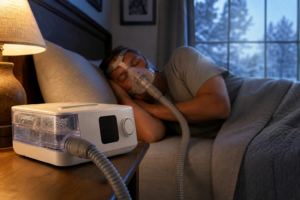
Device Humidifier Settings for Fall and Winter What Changes You Need to Make
Why Humidifier Settings Change When Temperature Drops Your sleep apnea device has been working great all summer and fall. You’re hitting your therapy goals, your partner stopped mentioning snoring, and you’ve finally hit that sweet spot with your settings. Then November hits. Suddenly your throat feels drier. You’re waking up…
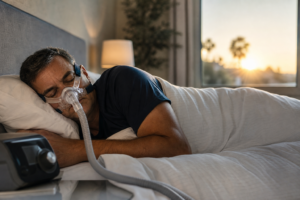
Daylight Saving Time Sleep Apnea Adjustment A Clinical Guide for 2026
Understanding the Impact of Daylight Saving Time on Sleep Apnea Patients When that first Sunday in March rolls around each year, most people think about losing an hour of sleep. For sleep apnea patients, though, daylight saving time represents something far more clinically significant: a sudden disruption to the precise…

Why Snoring Increases During Autumn Weather Changes and What Patients Should Know
Understanding the Connection Between Seasonal Changes and Sleep-Disordered Breathing You’ve made it through a solid sleep routine all summer, but something shifts when September rolls around. Your spouse mentions the snoring’s gotten worse. You wake up more tired than usual, even though you’re hitting your normal sleep hours. And if…